
PT-141 (bremelanotide), central melanocortin receptor agonism
MC3R/MC4R activation, the discovery of bremelanotide, and why it's a useful melanocortin reference standard.
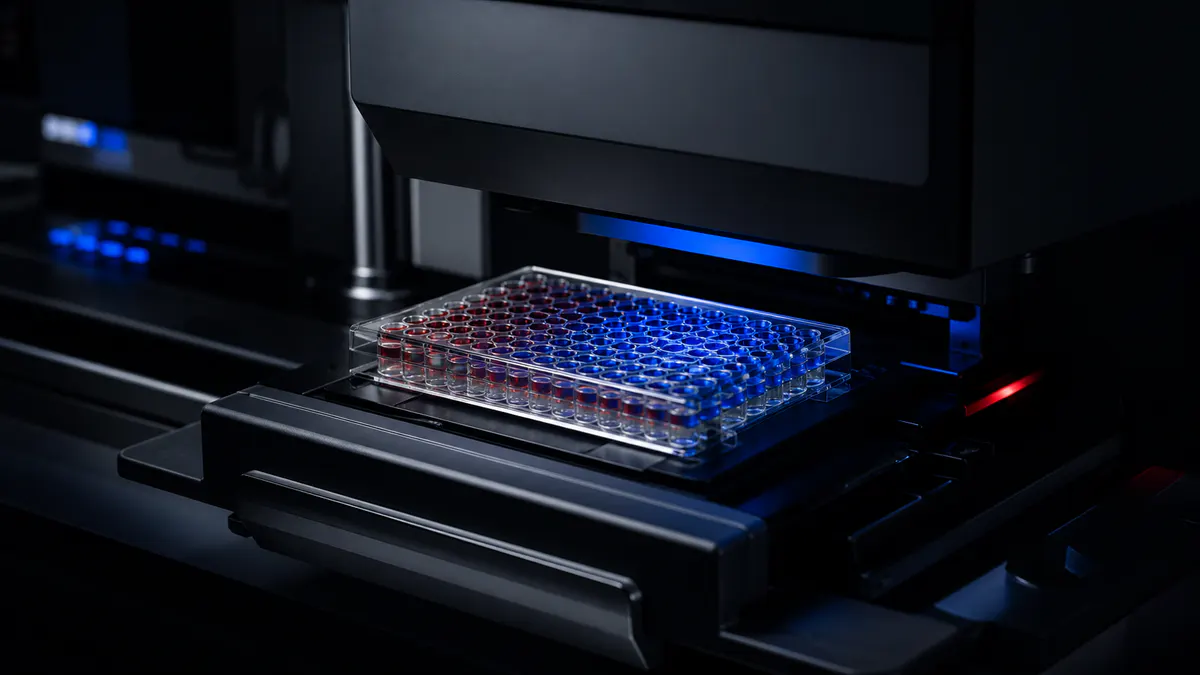
PT-141 (bremelanotide) is one of the most-studied research peptides in the melanocortin family. This guide covers its mechanism (MC3R/MC4R activation), how it differs from its parent compound Melanotan II, what to look for in a COA, and the storage + reconstitution protocol Canadian research labs typically use.
What PT-141 is
PT-141 is a 7-residue cyclic heptapeptide (Ac-Nle-cyclo[Asp-His-D-Phe-Arg-Trp-Lys]-OH) developed in the mid-1990s as a metabolic byproduct of Melanotan II research. Where Melanotan II is a near-pan-agonist at the melanocortin receptors (MC1R/MC3R/MC4R/MC5R), PT-141 has the lactam-bridged backbone of MT-II without the C-terminal amide, a modification that shifts its selectivity profile toward MC3R/MC4R and away from MC1R (the receptor primarily responsible for pigmentation responses in MT-II research).
Mechanism: MC3R and MC4R activation
MC3R and MC4R are G-protein-coupled melanocortin receptors expressed primarily in central nervous system tissue, particularly the hypothalamus and limbic regions. Binding produces downstream signaling via the cAMP/PKA pathway and, in mammalian research models, modulates appetite regulation, sexual response circuitry, and inflammatory pathways. PT-141 binds MC3R and MC4R with low-nanomolar affinity per published radioligand displacement studies; the MC1R activity is roughly an order of magnitude weaker, which is the basis for the catalog distinction between PT-141 (selective MC3/4) and Melanotan II (broad melanocortin).
PT-141 vs Melanotan II at a glance
| Property | PT-141 | Melanotan II |
|---|---|---|
| Sequence | Ac-Nle-cyclo[Asp-His-D-Phe-Arg-Trp-Lys]-OH | Ac-Nle-cyclo[Asp-His-D-Phe-Arg-Trp-Lys]-NH₂ |
| Selectivity | MC3R / MC4R preferred | Broad: MC1R, MC3R, MC4R, MC5R |
| Molecular weight | ~1025 Da | ~1024 Da |
| Research focus | Central MC3/4 signaling, appetite-axis, sexual response circuitry | Pigmentation models + broad melanocortin |
| Pure North Peptides | Not currently stocked, see catalog | Not currently stocked, see catalog |
Reading the COA for a PT-141 lot
A research-grade PT-141 batch should ship with a signed COA naming the lab that ran the panel. The three items to check before any research run:
- Reported area purity. Read the named sample's result and the specification stated on its original certificate. Do not assume a universal purity floor or use purity alone to decide whether material suits an experiment. Pure North's published reports are at Lab Results.
- Separate identity testing. Mass-spectrometry identity is a separate measurement. Pure North's published Canada Peptide Testing reports cover RP-HPLC-UV area purity and content only; they do not include mass-spectrometry identity results.
- Endotoxin testing. The published CPT reports do not include endotoxin or LAL results. If an experiment requires that measurement, obtain a suitable test result rather than inferring it from HPLC purity.
Match the compound, vial size and lot or assigned reference with the report at /lab-results/. An assigned reference is not automatically the batch code printed on a vial; ask customer service to confirm the connection if they differ. See the COA reading guide for full field-by-field detail.
Storage and reconstitution
PT-141 storage follows the standard cyclic-peptide profile:
- Lyophilized: −20 °C, desiccated, protected from light. Stable 24+ months.
- Reconstituted: bacteriostatic water (0.9% benzyl alcohol). At 4 °C in solution, stable ~28 days. PT-141 is more stable in solution than many shorter linear peptides, the lactam ring contributes meaningful resistance to backbone proteolysis.
- Avoid: repeated freeze-thaw cycles. Aliquot before freezing if you need multiple access events. The cyclic backbone is robust, but ice-crystallization stress still degrades solution integrity over many cycles.
Cross-batch reproducibility
A retain-sample programme is one of the most useful things to look for in any supplier. If a vendor holds a retain on every lot and your assay produces unexpected results, the retain can be run against your in-hand material to localize whether variance is in the peptide itself, the lot-to-lot synthesis range, or upstream in your reagent or cell-culture pipeline. This retain practice is standard at pharmaceutical-grade suppliers but rare at research-chemical retailers, it's worth asking any supplier whether they hold retains before you commit to a long-running protocol.
Where to source PT-141 in Canada
PT-141 is listed in the current catalogue; Melanotan II is not currently stocked. Check the PT-141 product page for its published report and named sample coverage.
FAQ
What's the difference between PT-141 and bremelanotide?
They are the same molecule. Bremelanotide is the INN (international non-proprietary name) used in clinical literature; PT-141 is the developmental code name from the original Palatin Technologies research program. In research-supply catalogs the “PT-141” designation is more common.
How does PT-141 differ from Melanotan II?
Both are cyclic heptapeptides with nearly identical scaffolds. The key difference is the C-terminus: Melanotan II has a C-terminal amide; PT-141 has a free carboxylic acid. That one modification shifts the receptor-selectivity profile substantially, PT-141 prefers MC3R/MC4R, while Melanotan II also engages MC1R (the pigmentation receptor).
Is PT-141 stable in solution longer than other peptides?
The cyclic backbone gives it better protease resistance than typical linear peptides, but it's not indefinitely stable. Standard 28-day in-solution storage at 4 °C still applies. The improvement is mostly in tolerating freeze-thaw cycles better than equivalent linear sequences.
What purity should I expect from a research-grade PT-141 lot?
≥99% HPLC purity. Pure North Peptides batches typically test 99.1-99.5% on the HPLC panel. Anything below 98.5% is a red flag.
Can I compare PT-141 and Melanotan II in the same protocol?
Yes, this is a common comparative-pharmacology design. Order both as separate reference vials, document both COAs, and ensure equimolar dosing rather than equimass.
For laboratory research use only. Reference information, not medical advice or human-use guidance.
