
Reconstituted peptide shelf life: the working window
How long a reconstituted research peptide stays usable, why the window shrinks once water is added, and how temperature and freeze-thaw cycles set the real expiry.
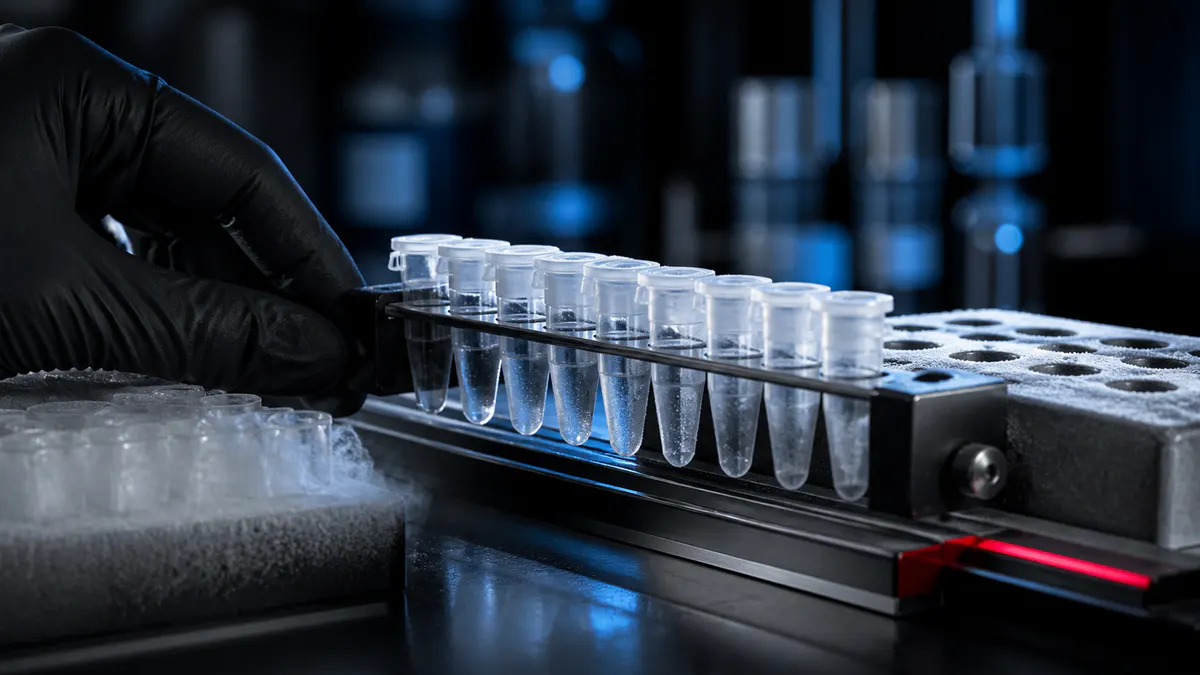
A lyophilized vial and a reconstituted vial are two different stability problems. Dry, a reference standard is stable for years at −20 °C. The moment you add water, a clock starts, and most labs underestimate how short that working window is.
Why water starts the clock
Lyophilization removes the water that drives hydrolysis and aggregation. Reconstitution puts it back, so a peptide in solution degrades on a timescale of weeks, not years. The exact rate depends on the sequence, the carrier solvent, and the storage temperature.
The practical window
As a bench rule of thumb, a reconstituted peptide held at 2-8 °C in bacteriostatic water is typically used within about a 28-day working window. Bacteriostatic water buys that time precisely because its benzyl alcohol suppresses microbial growth, plain sterile water does not, and shortens the window considerably.
Temperature is the biggest lever
Every 10 °C drop roughly halves the reaction rate. A vial left at room temperature degrades far faster than one kept cold. For storage past the working window, aliquot first, then freeze, freezing a single large vial and thawing it repeatedly is the worst case.
Freeze-thaw is cumulative
Repeated freeze-thaw cycles can affect sample stability. A certificate's initial area-purity result does not establish stability after reconstitution or repeated handling. More detail in our freeze-thaw stability guide.
Anchor expiry to the lot, not the calendar
Pure North publishes laboratory reports for the samples and vial sizes listed in Lab Results. Each report identifies its method, reference, area purity and measured content. Open the matching product page to check coverage for the size you select. A report does not cover every size or future lot; contact customer service if your vial reference differs. Bacteriostatic water has no COA.
For laboratory research use only. Reference information, not medical advice or human-use guidance.