
HPLC vs LC-MS for peptide identity verification
HPLC purity tells you what fraction is your peptide; LC-MS tells you whether it's the right peptide. Both are needed and they answer different questions.
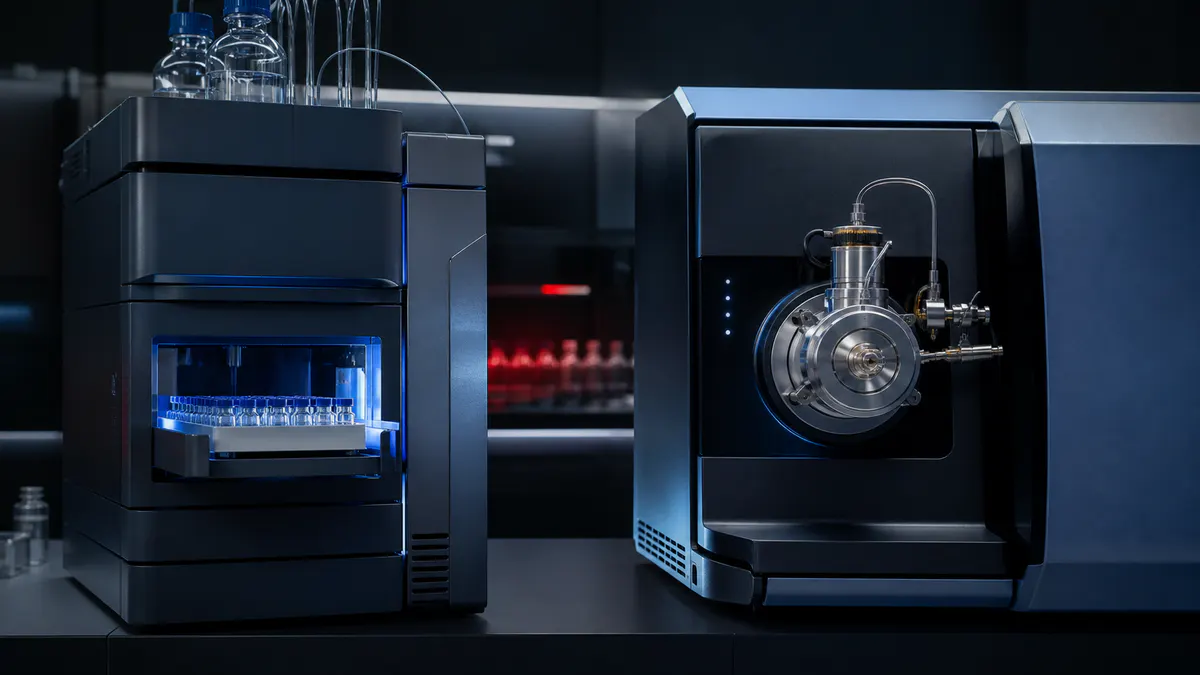
HPLC-UV area purity, measured content and mass-spectrometric identity evidence are different results. Read the method and reported quantity before comparing certificates.
HPLC-UV: area purity
Chromatography separates components under a specified method. Integrated UV peak areas can be reported as relative percentages. This is not automatically a mass fraction or a complete identity determination.
LC-MS: evidence about molecular mass
LC-MS combines separation with mass analysis. Mass measurements can help confirm an expected peptide mass and investigate impurities. The method and acceptance criteria determine how an identity conclusion is supported. A printed theoretical mass is not a measured result.
For a practical analytical example, see Waters’ peptide mass-confirmation and impurity-profiling application note.
What Pure North’s published reports contain
The reports in Lab Results give HPLC-UV area purity and measured content for the named sample. They do not include mass-spectrometric identity, endotoxin, sterility or water-content results. No such result should be inferred from a purity number.
Our Retatrutide 20 mg report records 20.24 mg content and 99.31% area purity. Content is reported as received, uncorrected for water and counter-ion content. Read the field-by-field walkthrough or check a report reference.
Disclaimer: All Pure North Peptides products are supplied for laboratory research use only. They are not approved by Health Canada as drugs. See our research-use declaration for full terms.
For laboratory research use only. Reference information, not medical advice or human-use guidance.
