
Peptide reconstitution math: a worked example
A step-by-step worked example of peptide reconstitution math, turning a vial size and a target concentration into an exact diluent volume and syringe marking.
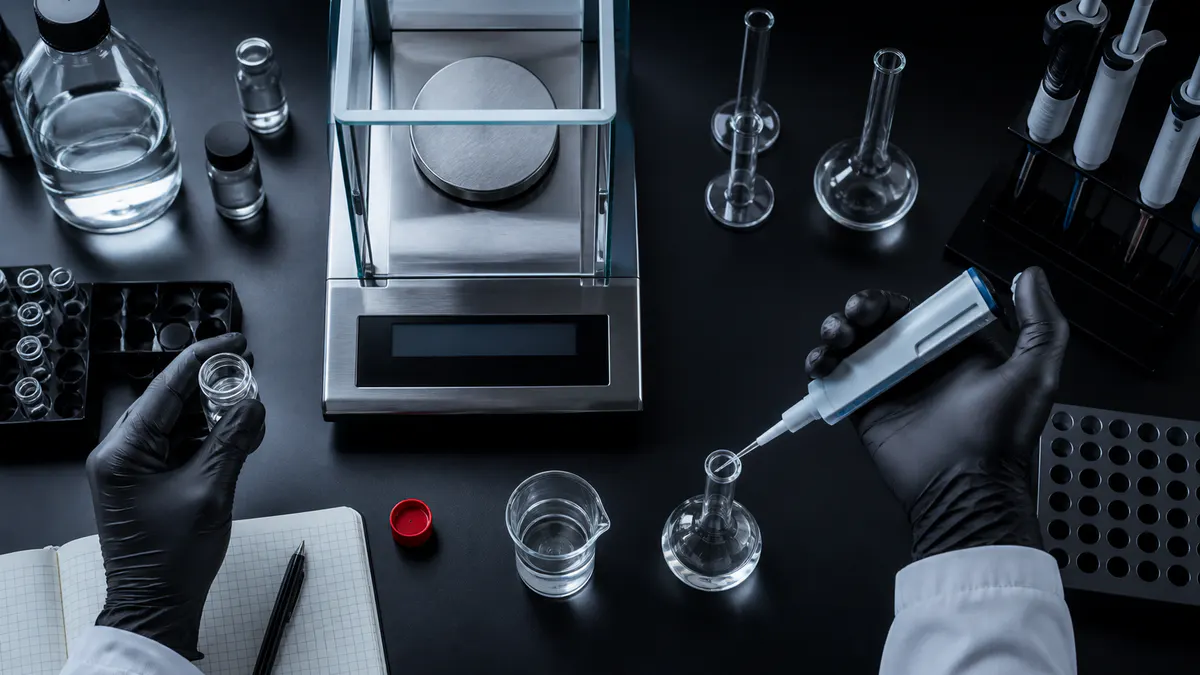
Reconstitution math trips up more research labs than any other bench step. The arithmetic is simple, but the units, milligrams, millilitres, micrograms, and syringe "units", are easy to cross. This is a single worked example you can copy for any lot.
The one equation
Everything reduces to: concentration = mass ÷ volume. If you know any two, you have the third. For a research vial the mass is fixed (printed on the COA), so you choose a target concentration and solve for the diluent volume.
Worked example: a 10 mg vial
Say the lot is a 10 mg lyophilized vial and the protocol calls for a stock at 5 mg/mL. Volume = mass ÷ concentration = 10 mg ÷ 5 mg/mL = 2 mL of bacteriostatic water. Draw 2 mL, add it slowly down the vial wall, and let the cake dissolve without shaking.
Converting to a syringe marking
An insulin syringe is marked in "units," where 100 units = 1 mL. At 5 mg/mL, each mL holds 5 mg, so 1 mg sits in 0.2 mL = 20 units. If a protocol specifies a 250 µg aliquot, that is 0.25 mg × 20 units/mg = 5 units on the barrel.
Sanity-check every number
Match the compound, vial size and lot or assigned reference before relying on a report. If a reference differs from the vial label, contact purenorthpeptides@proton.me for the documented connection. A report does not cover another size or future lot. Distinguish label claim from measured content; resolve discrepancies before choosing the mass input for a calculation.
Let the calculator do it
The calculator performs concentration arithmetic. It does not verify a vial’s content or identity. Check the original report and selected presentation separately.
For laboratory research use only. Reference information, not medical advice or human-use guidance.
