
Semax: ACTH-derived cognitive research peptide overview
Semax is a heptapeptide based on ACTH residues 4-10 with a Pro-Gly-Pro extension. Sequence, origin, and what HPLC-verified labs need for in-vitro CNS…
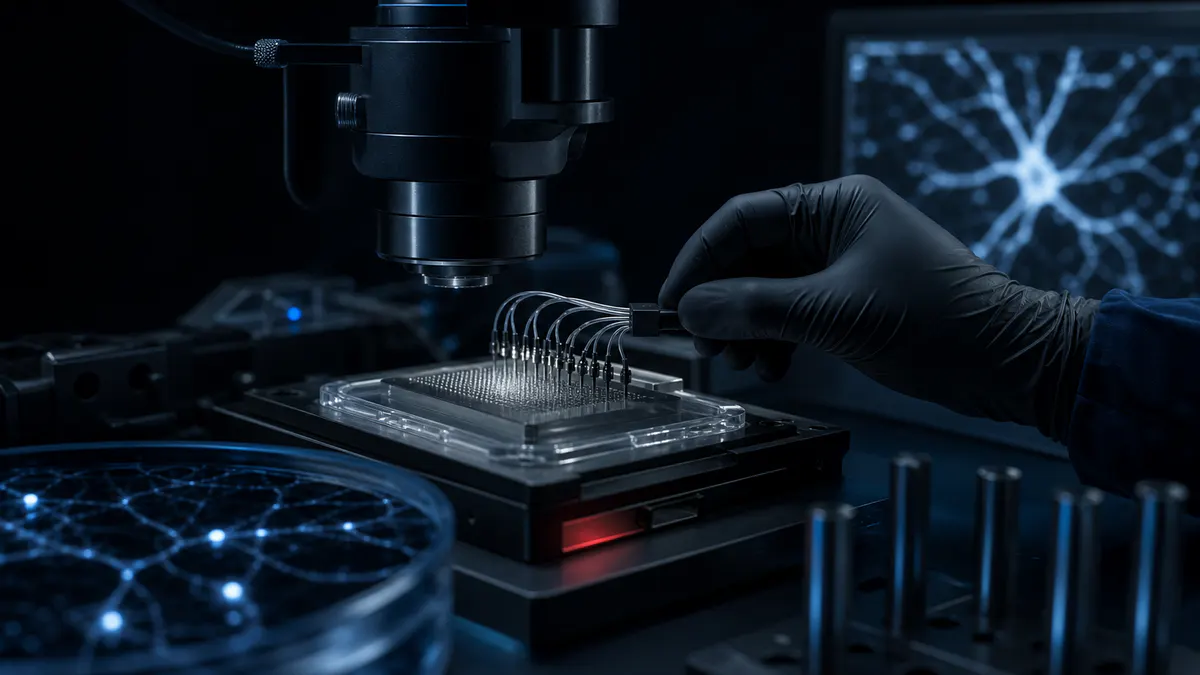
Short answer. Semax is a 7-residue synthetic peptide derived from ACTH 4-10 (Met-Glu-His-Phe-Pro-Gly-Pro) with a C-terminal PGP extension that resists proteolysis. Investigated in published research as a CNS-active short peptide. Semax 10 mg is stocked by Pure North Peptides; see the current catalog for available reference standards.
Origin: ACTH 4-10
Adrenocorticotropic hormone residues 4-10 (Met-Glu-His-Phe-Arg-Trp-Gly) is the minimal melanocortin-receptor active fragment in published literature. Semax replaces the natural sequence with Met-Glu-His-Phe and appends Pro-Gly-Pro for stability, the resulting heptapeptide retains the N-terminal ACTH-derived core while the C-terminal cap blocks proteolysis.
Sequence and mass
Met-Glu-His-Phe-Pro-Gly-Pro (MEHFPGP). Mass 813.94 Da. The methionine residue is air-sensitive; reference-grade material should be sealed under nitrogen and stored cold.
Quality criteria
- RP-HPLC purity ≥ 99%.
- ESI-MS at 813.94 Da ± 0.3 Da.
- Methionine sulfoxide content < 2% (oxidation marker).
- Net peptide content ≥ 80% by AAA.
Storage caveats
Methionine oxidation is the dominant degradation pathway. Lyophilized vials should be sealed under nitrogen and stored cold; opening protocols should minimize air exposure. After reconstitution, 2-8 °C for 14 days maximum, or −80 °C aliquots in single freeze-thaw protocol.
Mechanism hypotheses
Published research investigates Semax's effects on BDNF expression, neurotrophin signaling, and monoamine turnover in CNS-relevant cell lines. As with most short peptides in this class, no single canonical mechanism is established; mechanistic claims should be tied to the specific assay being run.
Semax 10 mg is listed on the product page. COA temporarily unavailable.
Frequently asked questions
What is Semax derived from?
It is based on ACTH residues 4-10 with a Pro-Gly-Pro C-terminal extension for protease resistance.
Is Semax related to Selank?
Both are short synthetic peptides studied in CNS research with PGP extensions, but they derive from different parent proteins (ACTH vs tuftsin).
Why is methionine oxidation a concern?
The N-terminal methionine in Semax oxidizes to methionine sulfoxide on air exposure, shifting receptor pharmacology. Reference-grade material should show < 2% Met-O.
What is Semax's molecular weight?
813.94 Da. ESI-MS confirmation should fall within 0.3 Da on a competent COA.
Where to buy Semax reference standard in Canada?
Semax 10 mg is listed on the product page. COA temporarily unavailable.
Disclaimer: All Pure North Peptides products are supplied for laboratory research use only. They are not approved by Health Canada as drugs. See our research-use declaration for full terms.
For laboratory research use only. Reference information, not medical advice or human-use guidance.

